Axial fans move large volumes of air at low pressure along the axis of rotation, while blowers — including centrifugal and axial blower designs — generate higher pressure to push air through ducted systems or against resistance. Choosing the wrong type results in insufficient airflow, excessive energy consumption, or premature equipment failure. The distinction matters most when system resistance — measured as static pressure — is a primary design constraint. This article explains exactly how axial fans and blowers differ, when each is the correct choice, and how to evaluate performance specifications for real-world applications.
An axial fan draws air in parallel to its rotational axis and discharges it in the same axial direction. The blades are shaped like aerofoils — similar in principle to aircraft propeller blades — and generate lift as they rotate, accelerating air forward through the fan housing. The defining characteristic is that the airflow path remains parallel to the shaft throughout the entire fan assembly.
Axial fans are optimized for high volumetric flow rate (CFM or m³/h) at relatively low static pressure — typically 0 to 50 Pa (0 to 0.2 inches W.G.) for standard propeller-type units, and up to 500–1,000 Pa for tubeaxial and vaneaxial designs with more sophisticated blade geometry. Their efficiency advantage is most pronounced in free-air or low-resistance installations where the priority is moving the maximum quantity of air per watt of input power.
The term "axial blower" is used in the industry to describe high-performance axial fan units — typically vaneaxial or counter-rotating designs — that are engineered specifically to develop sufficient static pressure for use in ducted or restricted systems. The distinction between an axial fan and an axial blower is not always standardized across manufacturers, but functionally, an axial blower operates at higher static pressure (generally above 250–500 Pa) and is designed to maintain performance against significant duct resistance, whereas a basic axial fan is sized for near-free-air conditions.
Axial blowers are commonly found in applications such as:
A key advantage of axial blowers over centrifugal blowers in these contexts is their in-line installation geometry — airflow enters and exits along the same axis, which allows direct installation inside an existing duct without changing the duct's direction or requiring a transition section.
The fundamental performance difference between axial fans and blowers (both centrifugal and axial blower types) comes down to the relationship between static pressure and volumetric flow rate. Understanding this relationship — the fan curve — is essential for correct equipment selection.
| Parameter | Propeller Axial Fan | Axial Blower (Vaneaxial) | Centrifugal Blower |
|---|---|---|---|
| Static Pressure Range | 0–50 Pa | 250–1,000 Pa | 500–5,000+ Pa |
| Volumetric Flow Rate | Very High | High | Medium–High |
| Airflow Direction | Axial (in-line) | Axial (in-line) | 90° discharge |
| Peak Efficiency | 60–75% | 70–85% | 65–85% |
| Noise Level | Low–Medium | Medium | Medium–High |
| Physical Footprint | Compact | Compact (in-line) | Larger (scroll housing) |
| Typical Application | Cooling, ventilation | Ducted HVAC, tunnels | Industrial process, high-resistance ducts |
The steepness of the fan curve also differs significantly. Axial fans have a relatively flat curve — their airflow output drops sharply as static pressure increases. Centrifugal blowers have a steeper, more stable curve that maintains output more consistently as system resistance varies. This makes centrifugal blowers more forgiving in systems where resistance fluctuates, such as variable air volume (VAV) HVAC systems with changing damper positions.
One of the most important practical differences between axial fans and blowers is the phenomenon of aerodynamic stall. When an axial fan operates beyond its designed pressure range — for example, when a duct system becomes partially blocked or resistance increases unexpectedly — the blades can stall in the same way an aircraft wing stalls at too high an angle of attack. The result is a sudden, dramatic loss of airflow, increased vibration, elevated noise, and rapid rise in motor temperature.
In the fan performance curve, this unstable region appears as a dip or hump to the left of the peak efficiency point. Operating in this region — often called the "stall region" or "surge zone" — causes pulsating airflow, structural fatigue in the blade and housing, and in severe cases, motor burnout. Vaneaxial blowers have a wider stable operating range than simple propeller fans, but all axial designs have a stall threshold that centrifugal blowers are largely immune to due to their different impeller geometry.
The practical implication: never select an axial fan for a system where the operating point could drift into the high-resistance region. Always confirm that the system resistance curve intersects the fan curve well within the stable operating range, with at least a 15–20% margin from the stall point.
At their respective design points, both axial fans and centrifugal blowers can achieve peak efficiencies of 70–85%. The efficiency advantage of each type depends entirely on whether the application falls within its optimal operating range.
Axial fans are more efficient than centrifugal blowers for high-flow, low-pressure applications. A large industrial axial fan moving 50,000 m³/h at 50 Pa may operate at 80% efficiency. Installing a centrifugal blower for the same duty would deliver lower efficiency at that operating point and increase energy consumption. Conversely, using a propeller axial fan in a system requiring 500 Pa would result in the fan operating deep in its stall region — efficiency would collapse to below 30%, and the unit would likely fail prematurely.
Modern EC (electronically commutated) motor technology is increasingly applied to both axial fans and blowers, allowing variable speed operation matched to actual system demand. An EC-driven axial fan or axial blower operating at 60% speed consumes only about 22% of full-speed power (following the affinity laws: power scales with the cube of speed), delivering substantial energy savings in variable-demand systems such as data center cooling and HVAC air handling.
Noise is a frequent selection criterion in HVAC, electronics cooling, and occupied space ventilation. Axial fans generally produce lower noise levels than centrifugal blowers when both are sized for equivalent airflow at low static pressure, because the axial blade geometry produces less turbulence and lower tip velocities for a given airflow rate.
However, axial fans produce a more tonal, high-frequency noise signature — a distinctive "blade passing frequency" tone at a frequency equal to the number of blades multiplied by the rotational speed. For example, a 6-blade axial fan running at 1,450 RPM generates a dominant tone at 145 Hz, which is more perceptible and annoying to occupants than the broader, lower-frequency noise spectrum of a centrifugal blower.
Noise reduction strategies for axial fans include:
The selection process should always start from the system's operating requirements, not from a preference for one technology over another. Follow this sequence:
| Requirement | Best Choice | Reason |
|---|---|---|
| High airflow, near-free-air (0–100 Pa) | Propeller axial fan | Maximum CFM per watt; lowest cost |
| In-line duct, moderate pressure (150–600 Pa) | Axial blower (vaneaxial) | In-line geometry; high efficiency in this range |
| High resistance system (500–5,000 Pa) | Centrifugal blower | Stable curve; no stall risk; widest pressure range |
| Tunnel or mine ventilation | Axial blower (reversible) | Reversible airflow; compact diameter for tunnel fit |
| Electronics / server cooling | Axial fan or axial blower | Compact form factor; in-line with component airflow path |
| Variable resistance with frequent fluctuation | Centrifugal blower + VFD | Stable fan curve prevents stall during resistance changes |
Misapplication of axial fans and blowers is one of the most common sources of ventilation system underperformance. The following errors appear repeatedly in engineering and maintenance practice:
3段階濾過:エアスクラバーは、プレフィルター(MERV-10)、カーボンフィルター、H13 HEPAフィルターを含む3段階濾過システムを備えています。 0.3ミクロンもの小さな粒子を99.97%捕らえながら、ほこり、花粉、煙、臭いを効果的に除去します。これにより室内の空気の質がすぐに改善され、より快適な生活環境が生まれます。 ユーザーフレンドリーなコントロールパネル:コントロールパネル...
詳細を見る
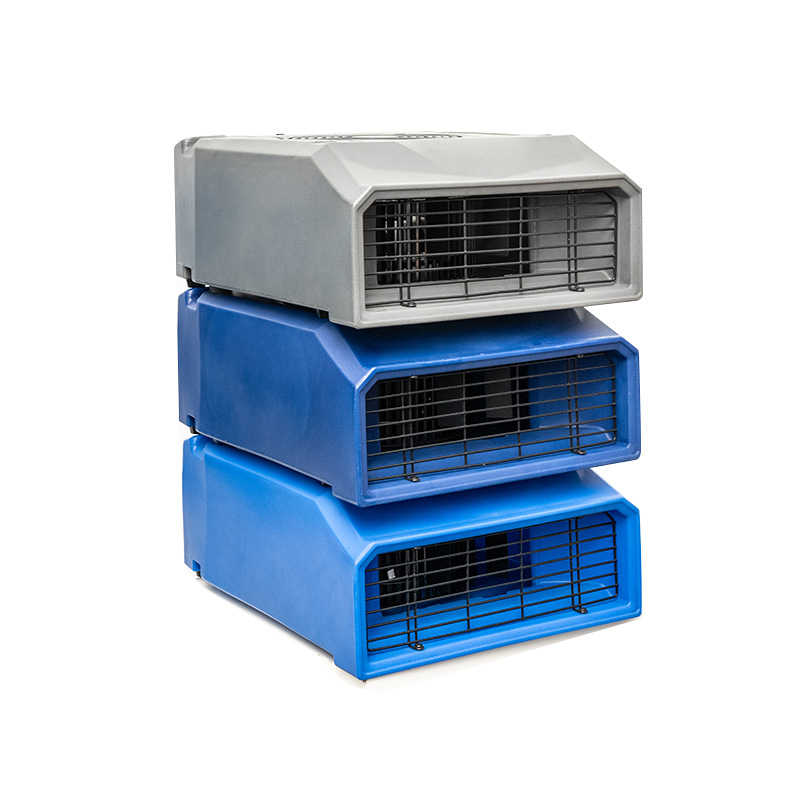
AM-B01 大風量薄型カーペット乾燥機は、強力なモーターを搭載しており、大風量でカーペットを素早くしっかり乾燥させます。この高い空気量は湿気の蒸発を促進するだけでなく、カーペットの繊維の奥深くまで浸透し、湿気の余地を残しません。洗練されたコンパクトなこれらのマシンは、狭いスペースにも簡単に収まり、カーペットの特定の領域を効果的にターゲットにできます。スリムなデザインにより、ユニットを使用し...
詳細を見る
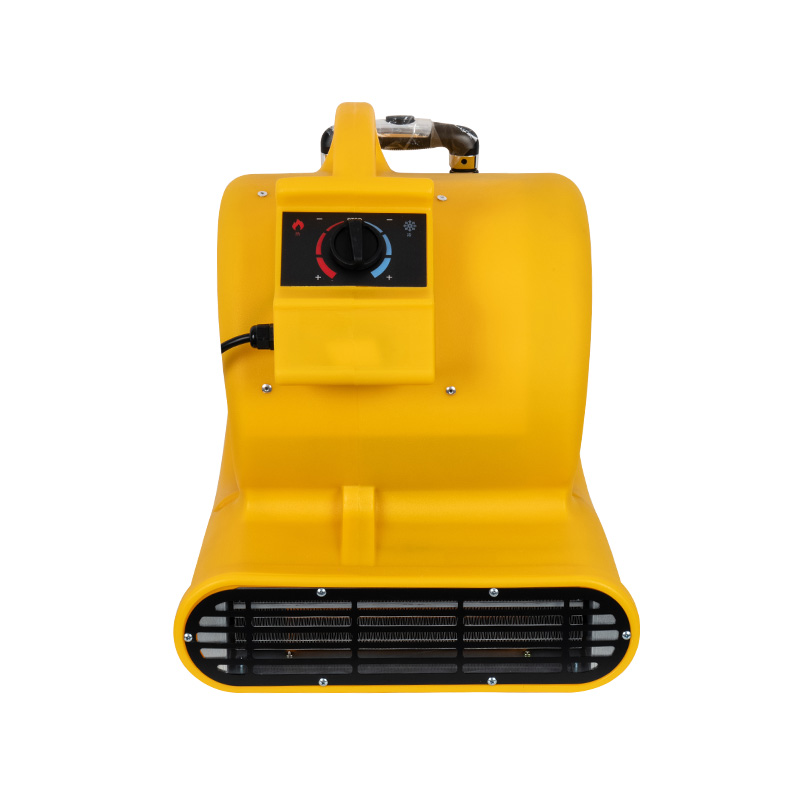
AM-A01 ホットおよびコールド カーペット乾燥ファンは、温風と冷気を利用してカーペットの乾燥プロセスを高速化するように設計された多用途ユニットです。熱気と冷気の循環の利点を組み合わせたこれらの革新的なファンには、大量の空気を生成する強力なモーターが装備されており、熱気または冷気がカーペットの表面に均一に分配されます。この包括的な空気の流れは、乾燥プロセスをスピードアップするだけでなく、カ...
詳細を見る
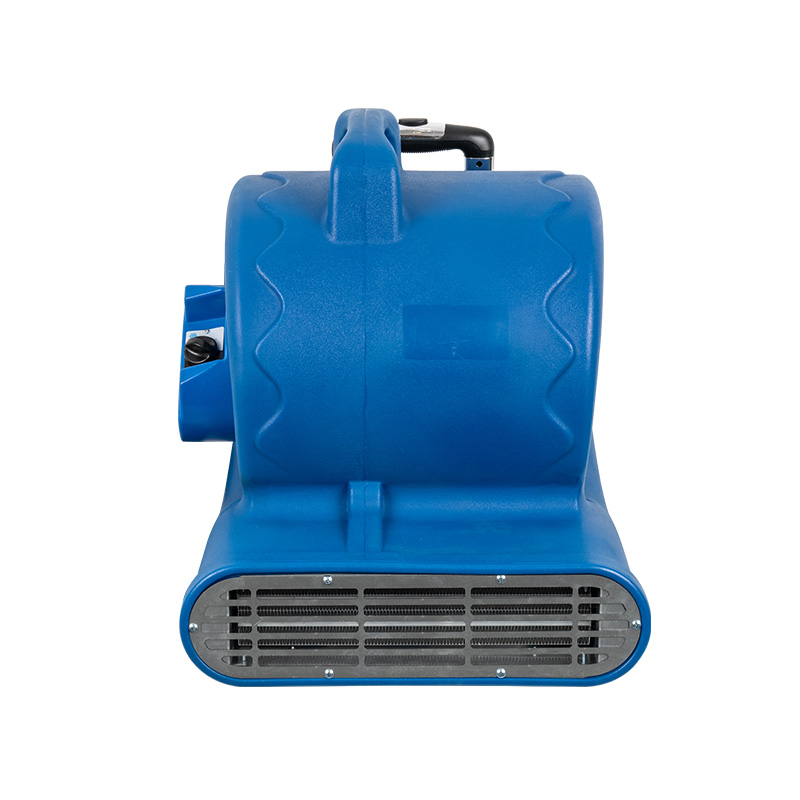
AM-A02 マルチウィング遠心風車カーペット乾燥機は、マルチウィング遠心風車技術の使用により、風力と気流を効果的に増加させ、より速くより効率的にカーペットを乾燥させます。複数のエアブレードを注意深く配置することで、遠心風力ホイールは高速回転で強力な気流を生成できます。この設計により、ファンの効率が向上するだけでなく、空気の流れも増加し、より広範囲のカーペット表面が均等な風力でカバーされるよ...
詳細を見る
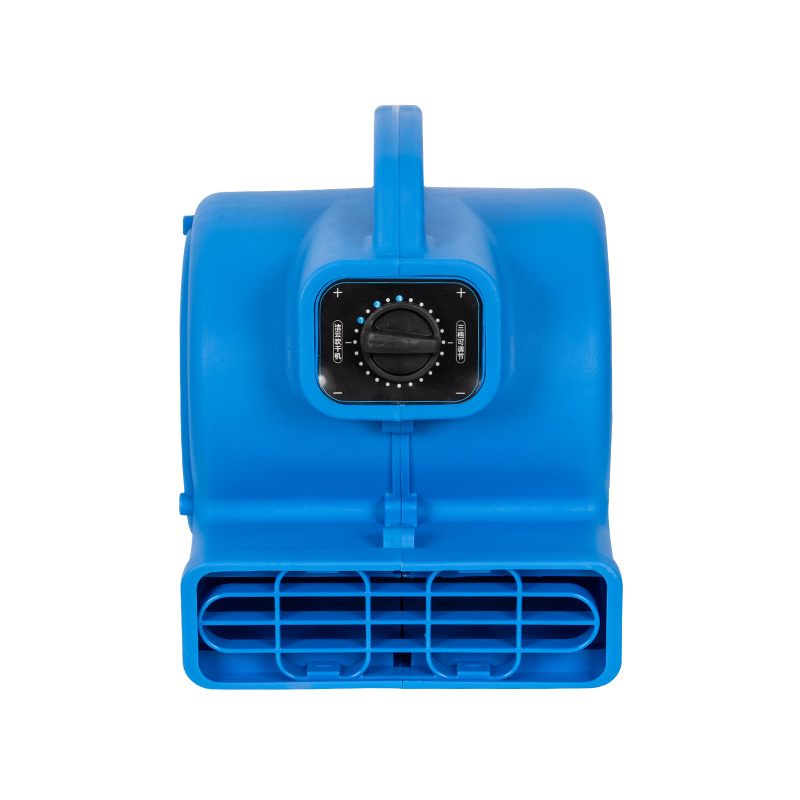
AM-A03 小型アキシャル フロア カーペット ドライヤーは、表面をより速く乾燥させるための遠心送風機を備えた、高効率で多用途の乾燥ユニットです。カーペット、床、家具、窓、壁の乾燥に適しているだけでなく、換気装置としても機能し、室内の空気循環を高めます。この製品は 3 つの速度と 3 つの操作位置 (0°、20°、90°) で独自に設計されており、さまざまな乾燥ニーズのシナリオに適していま...
詳細を見る
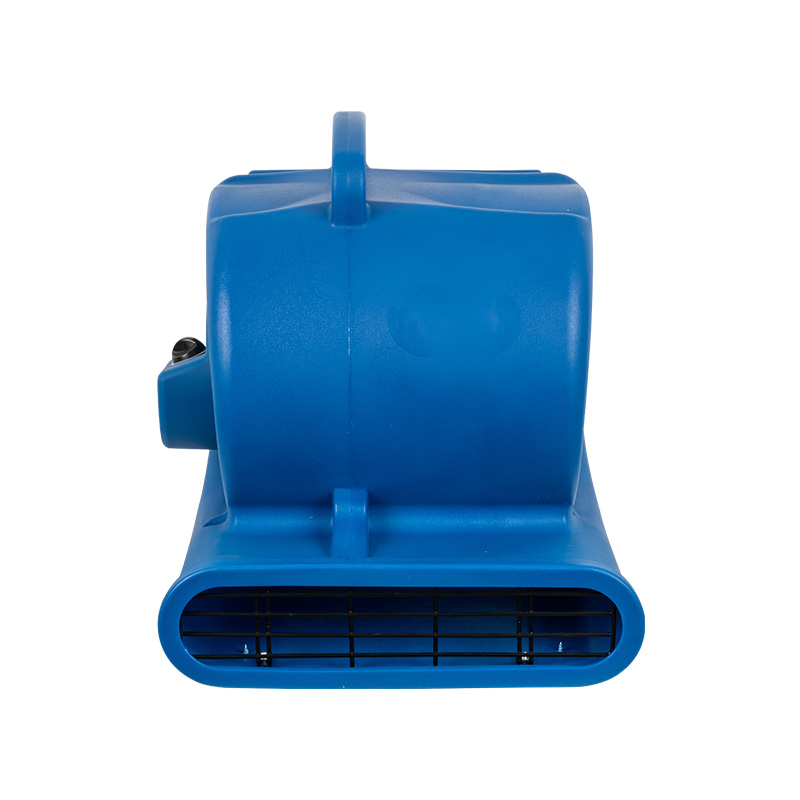
AM-A04 軽量ポータブル カーペット ウォール フロア ドライヤーは、高度な遠心空気移動技術を備えており、より迅速な表面乾燥を実現します。カーペット、床、家具、窓、壁などの幅広い乾燥作業に適しているだけでなく、換気して室内の空気循環を高めるように特別に設計されています。 AM-A04 床乾燥機は 3 つの速度と 3 つの動作位置 (0°、20°、90°) を備えており、さまざまな環...
詳細を見る店舗情報
中国浙江省紹興市盛州市三江街岳新路88号
+86-13819532379
リンク
製品
モバイル端末